What the Financial Statements Look Like at an Operating Inflection
At a confirmed operating turn, the statements show a growth-rate-spread event — not margin expansion. Measured signatures from 23 outcome-labeled inflections versus 156 mature compounders, fiscal windows roughly FY2014–FY2025.
Micron Put Up the Perfect Three-Year Run
WEAK to STABLE to STRONG, then three more STRONG quarters. Filing-day tape from $64.59 to $1,213.56. Execution through the glut, then an AI cycle that filled the factory.

The Accounts Receivable x Revenue Cohort
FYE 2025. Ten names where revenue accelerated and receivables lagged — growth that collected — before the next year-end replaces the window.

How Customer Float Funds Growth and What Happens When It Reverses
Cash that arrives before the cost is incurred shrinks the capital base and makes growth self-funded. The same structure is a claim against the business the moment growth stalls.
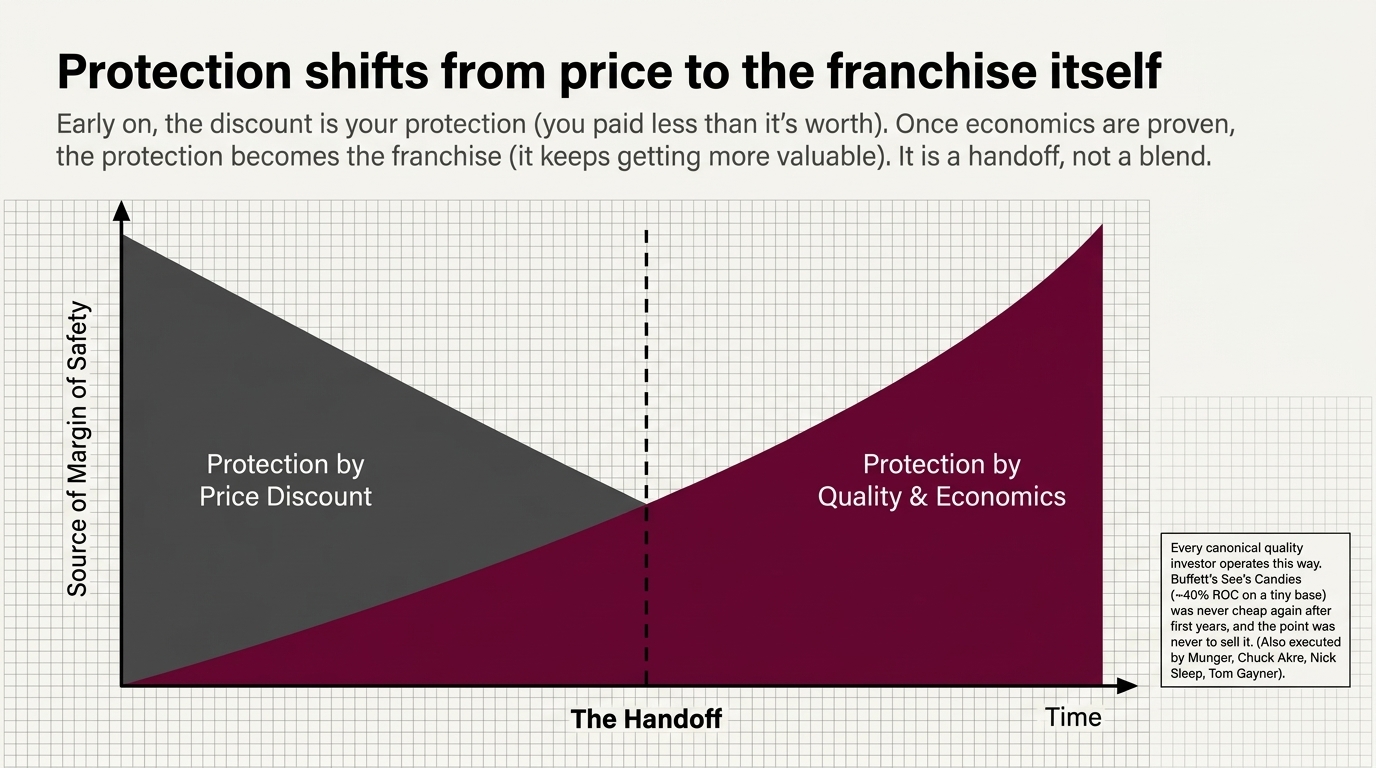
When to Hold a Compounder Past Its Margin of Safety
The value rule that says sell when the discount closes is the exact rule that caps your returns on a real franchise.
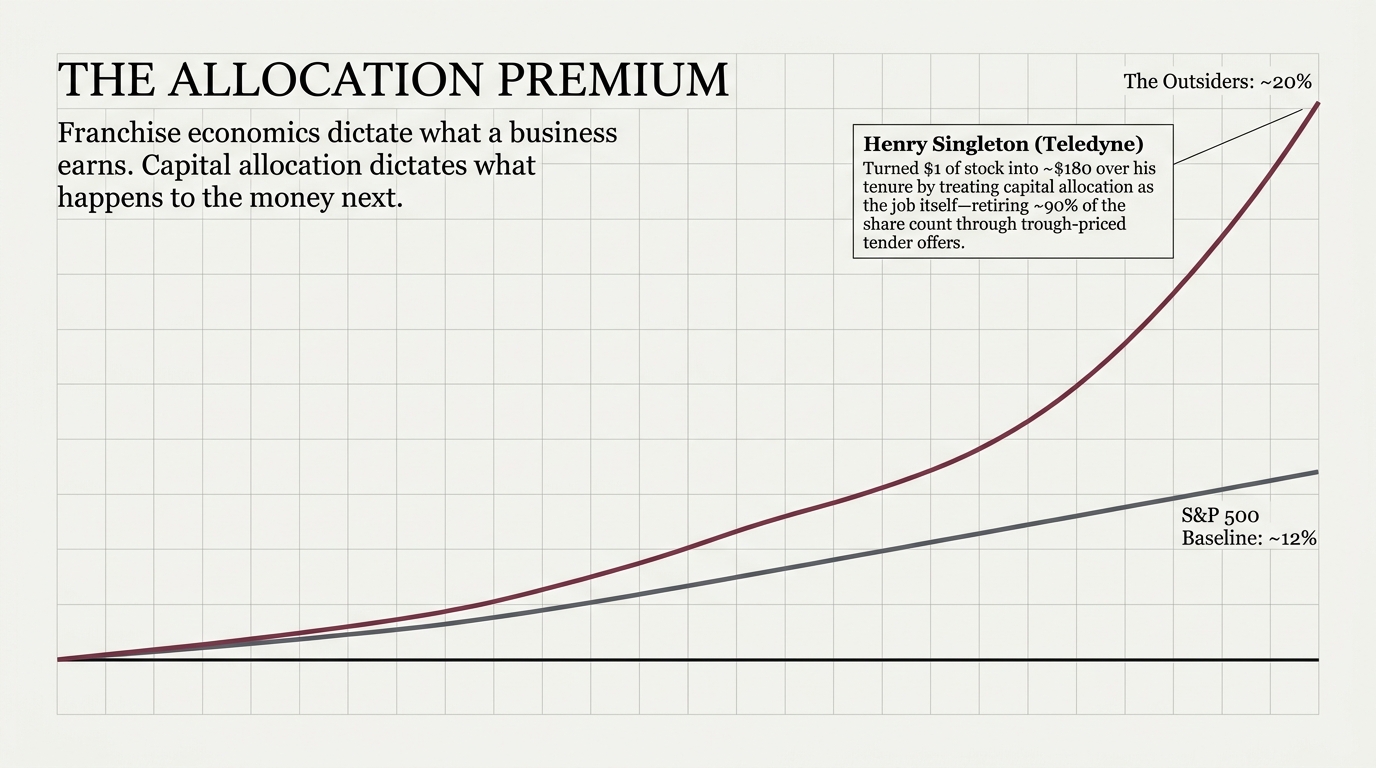
How to Evaluate Management as Capital Allocators
Two identical franchises diverge by 10x over a decade for one reason. The five ways allocators fail, and the tell that shows up in the pay package years before the deals.
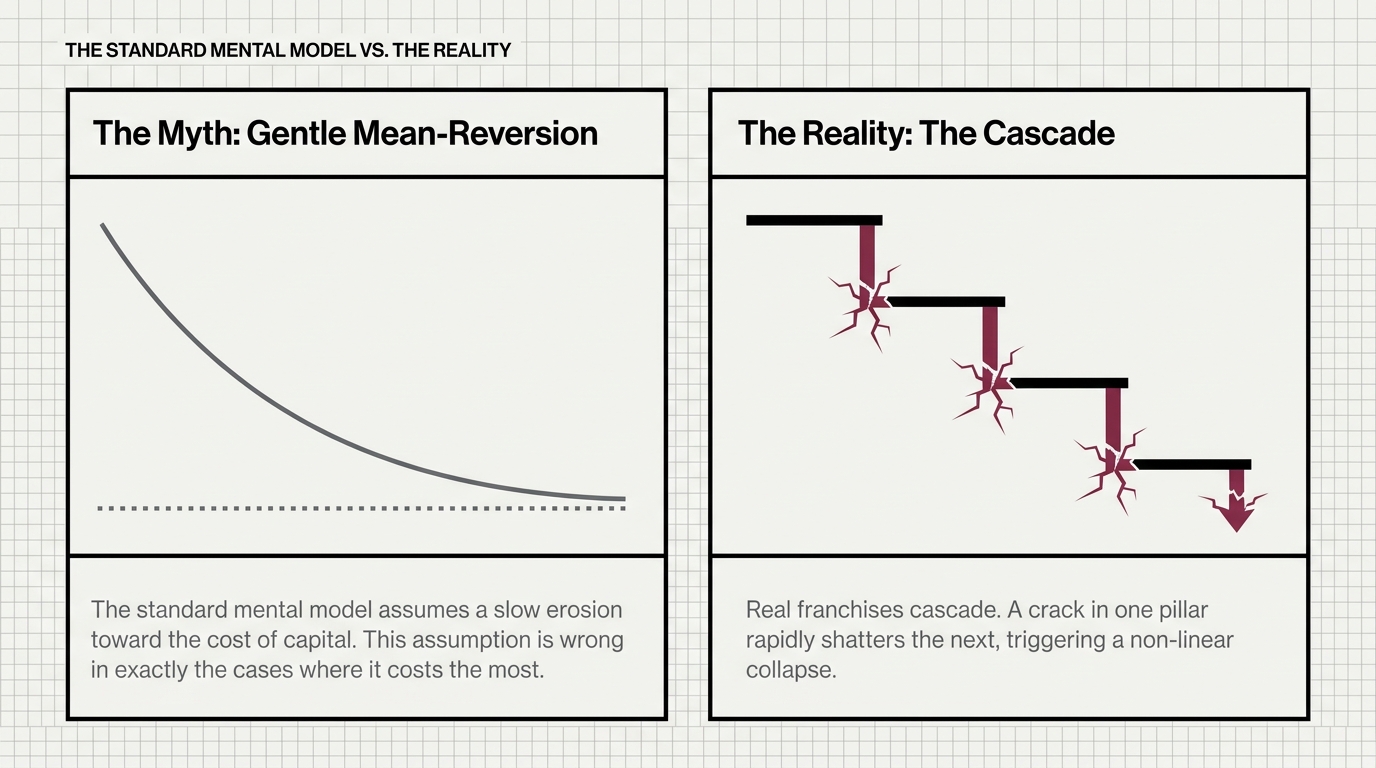
Early Warning Signs a Competitive Moat Is Collapsing
Great businesses don't fade politely. They unravel in a detectable order, and they look strongest right before the wipeout.
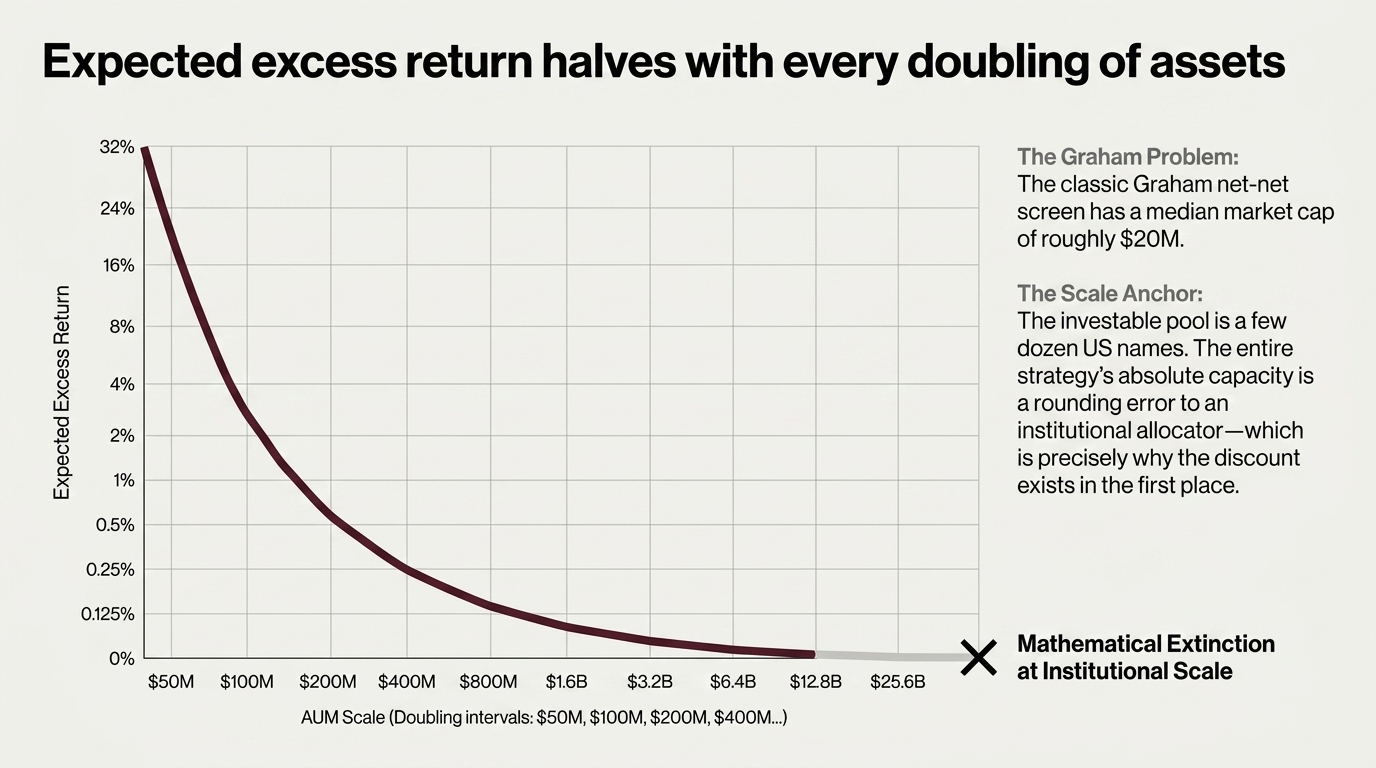
Strategy Capacity: Why Concentrated Alpha Decays as Assets Grow
The strategy that beats the market at $50M cannot exist at $5B. Skill doesn't fade - your own buying erases the discount you came for.
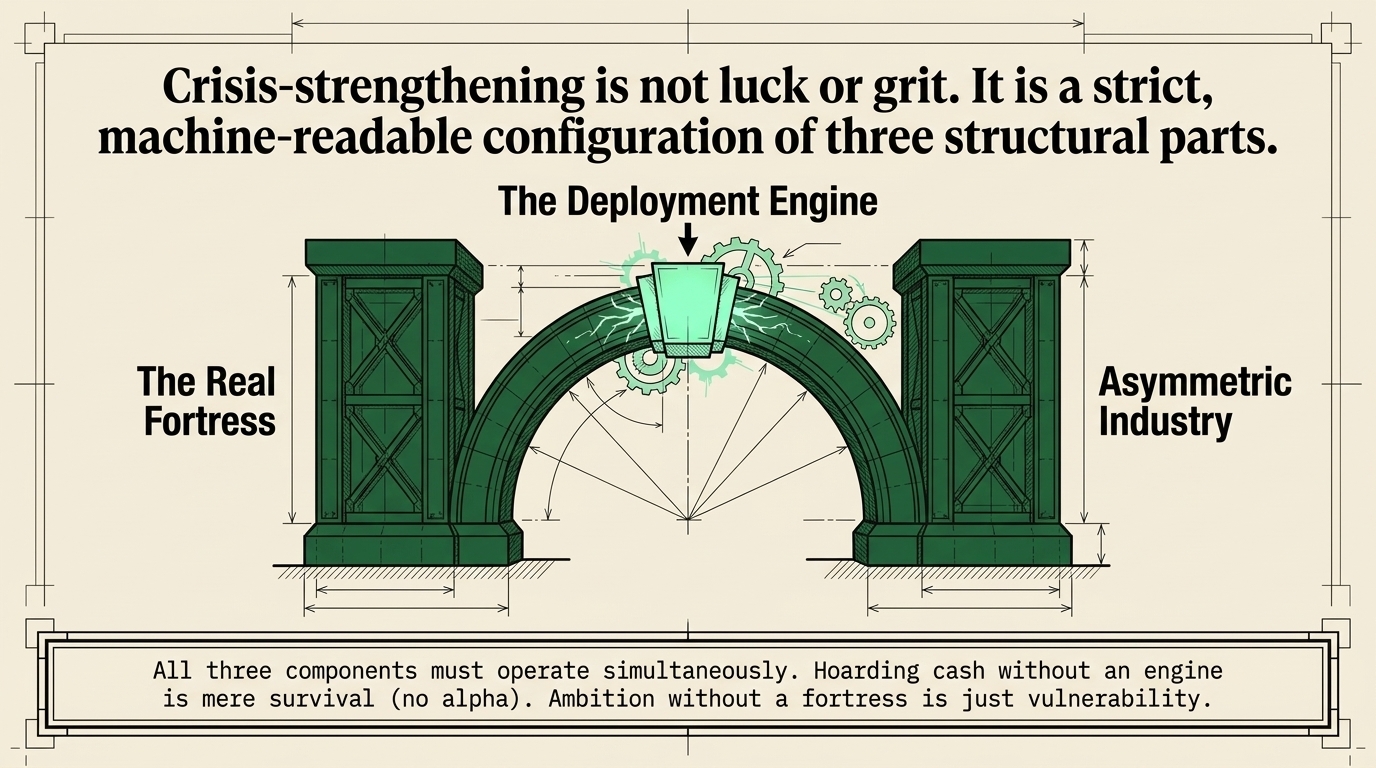
Identifying Strength in Recessionary Market Conditions
Some businesses convert a recession into permanent market share. Two impostors wear the same uniform.